AMCA to Fly with a Super Brain as ADE Developing Flight Control Computer with 25x Computing Power than Tejas Jets
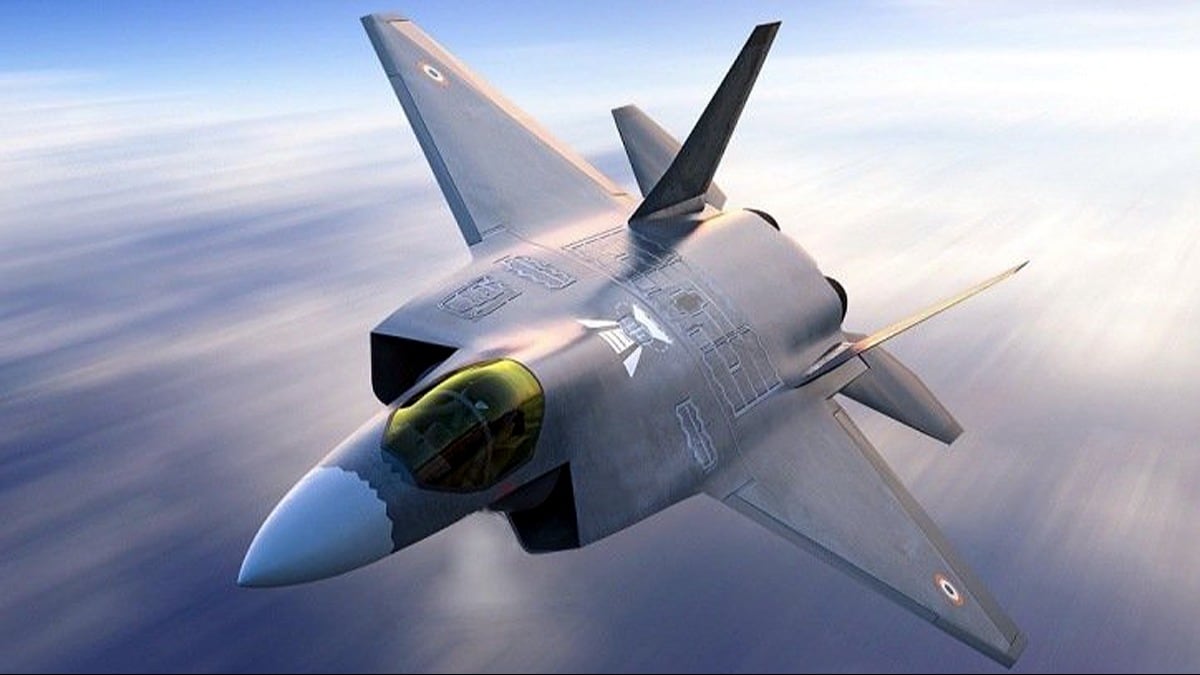
India's ambitious Advanced Medium Combat Aircraft (AMCA) program is set to soar to new heights with a cutting-edge "brain" at its core. The Aeronautical Development Establishment (ADE) is developing a next-generation Digital Flight Control Computer (DFCC) for the AMCA, boasting processing power nearly 25 times greater than that of the Tejas Mk1A and MkII fighter jets.
In modern fighter aircraft, the DFCC acts as the central nervous system, responsible for managing flight control systems and ensuring stability, maneuverability, and overall performance. It processes data from various sensors and pilot inputs, translating them into real-time commands for the aircraft's control surfaces, engines, and avionics.
The AMCA, with its advanced stealth capabilities, sensor fusion, electronic warfare systems, and ability to operate in contested airspace, demands a DFCC with exceptional computational power. This increased processing capacity is crucial for handling the complexity of the aircraft's systems and enabling rapid decision-making in critical situations.
The AMCA's DFCC will be designed to support next- generation features such as Al-enhanced autonomy, advanced stealth management, and multi-role capabilities. This leap in processing power will allow the aircraft to adapt to evolving threats and integrate seamlessly with future defence technologies, including unmanned systems and advanced electronic warfare suites.
Furthermore, the DFCC is being developed with future upgrades in mind. Its architecture will allow for software patches and capability enhancements throughout the AMCA's service life, ensuring it remains at the forefront of aviation technology for decades to come.
Sixth-generation technologies [edit]
In an interview given in 2020, the then Air Force Chief R. K. S. Bhadauna stated that "The planning process is already underway for combat systems like optionally manned sixth generation technologies, smart wingman concept, swarm drones, long persistent HALE (High-Altitude Long Endurance) platforms and hypersonic weapons, among others. He also added that it is imperative to incorporate such advanced technologies to keep AMCA relevant. It is also reaffirmed by IAF's current chief Vivek Ram Chaudhari.
Stealth and radar signature
The AMCA design has inherent radar stealth, achieved through twin-tail layout, platform edge alignment and serration, body conformal antenna and low intercept radar, diverterless supersonic inlet (DSI) with serpentine ducts which conceal engine fan blades, internal weapons bay and extensive use of composites in airframe. According to Janes Information Services quoting ADA, the airframe of AMCA will have 38-40% composite. As of October 2022, designers are still in the process of refining the radar deflection capability of AMCA It will also use radar-absorbent materials wherever necessary.

Sensors and avionics
The AMCA is expected to have distributed passive sensors with Artificial intelligence (Al) assisted multi-sensor data fusion to increase situational awareness and to work in tandem with the advanced electronic warfare (EW) suite onboard AMCA The AMCA has a distributed processing system employing fast processors and smart subsystems. The AMCA will also have an integrated vehicle health monitoring system which works on sensor fusion
AMCA will be equipped with a larger and powerful variant of the Uttam AESA Radar which will use gallium nitride (GaN) technology it will be mounted on a mechanically steerable mount Di An onboard condition monitoring system is also planned to be included in the AMCA 10 The platform will be equipped with a quadruple digital fly-by-optics control system using fibre optic cables to reduce weight, increase the rate of data transfer and reduce electromagnetic interference.
Cockpit
He AMCA will have a glass cockpit equipped with a wide panoramic touchscreen display for enhanced man-machine interaction, a multi function display (MFD) placed in portrait orientation and a wide-angle holographic head-up display (HUD).
The AMCA will have hands-on throttle-and-stick (HOTAS) arrangement with right hand on stick and left hand on throttle settings to ease the pilot workload.
General characteristics
• Crew: 1
Length: 17.6 m (57 ft 9 in)
Wingspan: 11.13 m (36 ft 6 in)
Height: 4.5 m (14 ft 9 in)
Wing area: 55 m² (500 sq ft)
Empty weight: 12,000 kg (26,455 lb) (estimated)
Gross weight: 18,000 kg (39,683 lb)
Max takeoff weight: 27,000) kg (59,525 lb) (estimated)
Fuel capacity: 6,500 kg (14,300 lb)
Payload: 6,500 kg (14,300 lb)-1,500 kg (3,300 lb) internal and 5,000 kg (11,000 lb) external stores
Powerplant: 2 Modified GE F414 (initial production afterburning turbofan
Performance
Maximum speed: 2,600 km/h (1,600 mph, 1,400 kn)
Maximum speed: Mach 2.15
Range: 3,240 km (2.010 mi, 1,750 nmi)
Combat range: 1,620 km (1,010 m. 870 nmi)
Ferry range: 5,324 km (3,308 mi, 2,875 nmi)
Service ceiling: 20,000 m (65,000 ft)
Armament
Guns: 23 mm GSh-23 cannon
Hardpoints: 14 (in non stealth version) with a capacity of around 6.5 tons (expected), with provisions to carry
combinations of
Rockets: S-6 rocket pods (expected)
Air to air missiles
Astra IR
Astra Mark 1
Astra Mark 2
Jon
ations (projected)
прея
arch
Astra Mark 3
NG-CCM
Air to ground missiles
BrahMos NG
SANT
Rudram-1
Bombs:
Laser-guided bomb
NG-LGB
Precision-guided munition
HSLD-100/250/450/500
• DRDO SAAW
• DRDO Glide Bombs
Avionics
HSLD-100/250/450/500
DRDO SAAW
DRDO Glide Bombs
A larger variant of LRDE Uttam AESA Radar


.jpeg)


Comments
Post a Comment